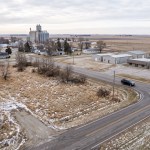
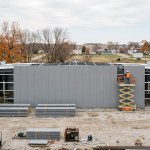
A commercial site selection checklist covers 8 things: what your business needs, zoning, access and traffic, utilities, the ground itself, the surrounding market, room to grow and total cost. Check all 8 before you sign a purchase agreement, because most site problems are cheap to find and expensive to fix.
This checklist is written for a business owner in Central Minnesota who plans to build, expand or relocate. It works for a clinic, a bank, an office, a shop or a production building. Use it to compare 2 or 3 sites side by side, then to make the decision with facts instead of a feeling.
What is a commercial site selection checklist?
A commercial site selection checklist is a written list of the questions a piece of land or a building must answer before you buy or lease it. It turns “this feels like a good location” into a decision you can defend to your partners and your lender.
Site selection is the process of matching a property to what your business does every day. A good checklist does 2 jobs. It rules out sites that can never work, and it ranks the ones that can. Most published checklists were written for retail stores. Yours should fit your own business, your own customers and the city you plan to build in.
What should be on the checklist?
The 8 areas below belong on every checklist, and each one has a person who can answer it. The table shows what to check and who to ask.
| Area | What to check | Who can answer it |
|---|---|---|
| Business needs | Size, layout, must-haves, budget, move-in date | You and your team |
| Zoning | Permitted use, setbacks, height, parking and landscaping rules | City planning staff |
| Access and traffic | Driveways, turn lanes, traffic counts, truck routes, visibility | City or county engineer, MnDOT maps |
| Utilities | Water, sewer, storm water, gas, power, internet, connection charges | City utility department, utility providers |
| The ground | Soil, wetlands, floodplain, slope, past uses, easements | Surveyor, soil engineer, environmental firm |
| Market | Customers, employees, competitors, neighbors, growth | Commercial real estate broker, local data |
| Room to grow | Space for expansion, more parking, a second building | Architect, city planning staff |
| Total cost | Land, site work, charges, taxes, incentives | Your development team, the city |
The sections below walk through each row.
What does your business need from a site?
Start with a short list of must-haves, because a site can only be judged against what your business needs. Write it before you tour anything.
- Size – how much building you need now, and how much in 5 to 10 years
- Use – what happens inside: patients, customers, production, storage, deliveries
- People – where your employees and customers drive from
- Budget – what the business can carry each month, not only what the land costs
- Date – when you must be open, often tied to a lease that is ending
Then split the list in 2. Must-haves are the items that end the conversation if a site lacks them. Wants are nice to have. Keep the must-have list short. If it runs too long, no site will ever pass.
Does the zoning allow your use?
Check zoning first, because it is the fastest way to rule a site out. Call the city planning office with the address and ask 3 questions: what is the zoning, is my use permitted, and what approvals would I need.
Zoning decides what can be built and how. Ask about:
- Whether your use is permitted, conditional or not allowed
- Setbacks, building height and how much of the lot you can cover
- Required parking, landscaping and lighting
- Any overlay district, such as an airport or historic area
- The city’s future land use plan for the area
Many owners buy land first and learn later that it needs rezoning. That adds months and offers no promise of approval. In Central Minnesota, St. Cloud, Sartell, Sauk Rapids, Waite Park and St. Joseph each have their own code, staff and meeting calendar. A use that is simple in one city can need a public hearing in the next.
Can customers, employees and trucks get in and out?
A site works only if people can reach it easily and safely. Look at access at the busiest hour of the day, not on a quiet Sunday.
Check these on every site:
- Road type – is it a city street, a county road or a state highway? Each has a different office that approves a new driveway
- Entry and exit – is there a turn lane, a signal or a median that blocks left turns?
- Traffic counts – MnDOT publishes average daily traffic maps that show how many vehicles pass
- Visibility – can a driver see your building and your sign in time to turn?
- Parking – does the lot fit what the city requires and what you really need?
- Deliveries – can a semi get in, unload and get out?
Ask the city if your project will need a traffic study. As 1 example of a Minnesota threshold, Duluth’s development guide asks about a study when a project is likely to generate 100 trips per hour or 1,000 trips per day.
Are utilities at the site, and what will they cost to connect?
Confirm that water, sewer, storm water, gas, power and internet reach the property line with enough capacity for your use. A cheap lot can turn costly if a utility has to be extended hundreds of feet.
Questions to ask the city and each utility:
- Where is the nearest water main, sewer main and fire hydrant?
- Does the system have capacity and pressure for your building?
- Can the power provider serve your load, especially for production equipment?
- Is the internet speed you need available?
- Are there utility easements that cut across where you want to build?
Minnesota cities also charge water and sewer access charges when a new building connects. These are often called SAC and WAC. They vary by city and by use, and they can be a real line in your budget. Ask for an estimate in writing early. Infrastructure charges like these are what generic checklists skip and local owners feel.
What is under and around the land?
The ground can hide the most expensive surprises, so test it during due diligence. Soil, water and past uses decide what your foundation and site work will cost.
- Soil – a soil engineer takes borings to see if the ground can carry your building. Poor soil means extra cost to correct it
- Wetlands – ask if a wetland delineation has been done in the last 5 years. Wetlands are generally avoided, and impacts need approval
- Floodplain – check the FEMA flood map for the parcel
- Storm water – new development has to treat and hold its runoff, which takes land
- Past uses – a former gas station, shop or dump can leave contamination. A Phase I environmental report looks at the history, and many lenders require one
- Survey and title – a survey shows the true boundary, easements and encroachments. Title work shows liens and restrictions
Some larger projects in Minnesota also trigger a state environmental review. Your city planner can tell you if yours would.
Does the surrounding market fit your business?
The area around the site should supply the customers and employees your business needs. A good building in the wrong location still struggles.
Look at who lives and works nearby, how the area is changing and who your neighbors would be. A clinic may care most about drive time for patients. A production company may care most about the workers within a half-hour commute and the route to the highway. A bank or shop cares about traffic, visibility and nearby anchors.
Look at competitors too. Being near one is not always bad. Shops and clinics often do well in a cluster that customers already visit, while 2 similar businesses can split a small trade area. Know which case is yours.
Also ask what is planned next door. A new road, a new subdivision or a competitor’s project can change a location within a few years. City staff and a local commercial real estate broker usually know what is coming before it is public.
Is there room to expand?
Buy or lease with your next step in mind. A site that fits today but cannot grow can force a move sooner than you planned.
Ask if the lot can hold a building addition, more parking or a second building and still meet setbacks and storm water rules. Ask if the neighbor’s land could be bought later. Paying for extra land you will not use for 15 years is not smart either. The goal is a site that fits the growth your business plan really shows.
What will the site really cost?
The land price is only part of the cost. Add up everything it takes to make the site ready for a building.
- Land and closing costs
- Soil correction, grading and storm water work
- Utility extensions and connection charges
- Road infrastructure the city requires, such as a turn lane or signal
- Property taxes and any unpaid special assessments
- City fees and the cost of approvals
Then ask about help. Some Minnesota cities offer business subsidies, such as tax increment financing or tax abatement, for projects that bring jobs or redevelop a tired property. These come with rules and a public process, and none are guaranteed. Our guide on what it costs to build a commercial building covers the building side of the budget.
How do you compare 2 or 3 sites?
Score each site against the same list, with more weight on what matters most to your business. A simple weighted score keeps the decision honest, so one exciting feature cannot hide a serious flaw.
Rate each item from 1 (poor) to 10 (excellent). Give each item a weight for how much it matters to you. Multiply the 2 numbers and add them up.
| Item | Weight | Site A rating | Site A score | Site B rating | Site B score |
|---|---|---|---|---|---|
| Access and visibility | 5 | 8 | 40 | 5 | 25 |
| Utilities at the lot | 4 | 4 | 16 | 9 | 36 |
| Room to expand | 3 | 6 | 18 | 8 | 24 |
| Total cost | 5 | 5 | 25 | 7 | 35 |
| Total | 99 | 120 |
The numbers above are only an example. Any site that fails a must-have comes off the list before you score it.
When should you check all this?
Do the quick checks before you make an offer and the costly ones during the due diligence period. That period is the window in a purchase agreement when you can study the property and still walk away. It is typically 30 days or more.
- Before an offer – zoning call, utility maps, traffic counts, flood map, a site visit at rush hour
- In the purchase agreement – a due diligence period long enough for testing and city meetings
- During due diligence – survey, title, soil borings, Phase I, a concept plan, a meeting with city staff
- Before closing – a written cost estimate and a clear path to approvals
If the site fails, you walk away with a small bill instead of a large problem. Our article on the commercial real estate feasibility study explains how to test whether the whole project works.
Who should help you choose a site?
Bring in people who know the local market and the building process before you commit. A broker finds the options. A development team tells you what each one will cost to build on.
Inventure Real Estate has commercial brokerage, real estate development, owner’s representation and property management under one roof in downtown St. Cloud. Our CEO, Doug Boser, has been on the construction side of the table since 1989 and the owner’s side since 2000. That background helps when a site looks fine on paper but has a soil, utility or approval problem a builder would spot.
We know the next steps with Central Minnesota cities, from approvals and PUDs to water and sewer access charges and business subsidies. You can see the kinds of buildings we have worked on at our projects page.
Here is where to go from here:
- Browse our commercial listings for available land and buildings
- Read our tips for choosing the right commercial real estate property
- Learn how Inventure BLUEPRINT helps you decide whether to build, expand or relocate
- See how our commercial brokerage and real estate development teams work together
- Talk with us about your building or call (320) 980-2300
Frequently asked questions
Site selection is the process of finding and testing a location for a business or a building project. It compares each property against the needs of the business, the rules of the city and the full cost to build or move in.
Zoning, access, utilities and ground conditions come first, because any one of them can stop a project. After that, weigh the market around the site, room to expand and total cost. The order of the rest depends on your business.
Yes. Call the city planning office before you make an offer and confirm your use is allowed. If the land needs rezoning or a conditional use permit, make your purchase depend on getting that approval.
It depends on the city and the size of the project. Cities usually ask for one when a project adds a lot of trips or sits on a busy road. Ask the city engineer early, because the study can lead to turn lanes or other work you will pay for.
It is typically 30 days or more, and it is negotiated in the purchase agreement. Raw land often needs longer, because soil borings, a survey, environmental work and city meetings all take time.
Yes. Copy the 8 row table in this article into a spreadsheet, add a column for each site and fill it in as you get answers. Then use the weighted score to compare the sites that pass your must-haves.